Picture this: you reach for your pocket knife to slice an apple on a hike, but the dull knife slides off the skin instead of biting in. A sharp knife isn't just satisfying to use; it's safer, quicker, and lets every cut land with less force and more control over the blade.
Learning how to sharpen a pocket knife is a life skill that takes practice and the right tools. Once you understand the sharpening angle, the burr at the apex, and the final polish, you can keep most pocket knives sharp at home without paying a professional.
Why a Sharp Pocket Knife Matters
Dull knives cause more accidents than sharp ones. Safety training from OSHAcademy confirms that the most common injuries are cuts to the hands and fingers, which often happen when using a dull blade. Because a dull edge requires excessive force to cut, the knife is far more likely to slip and cause a serious accident.
Keeping your knife sharpened regularly protects your fingers and preserves its performance, whether you're slicing rope, prepping food, or trimming paracord on a job site. A sharp pocket knife also lasts longer, since less force on every cut means less stress on the blade and pivot.
Tools You Need to Sharpen a Pocket Knife
Gather a small kit of knife-sharpening tools before you start so you're not improvising mid-pass. The right tools make the difference between a sharp edge and a chewed-up one.
Sharpening Stone (Whetstone)
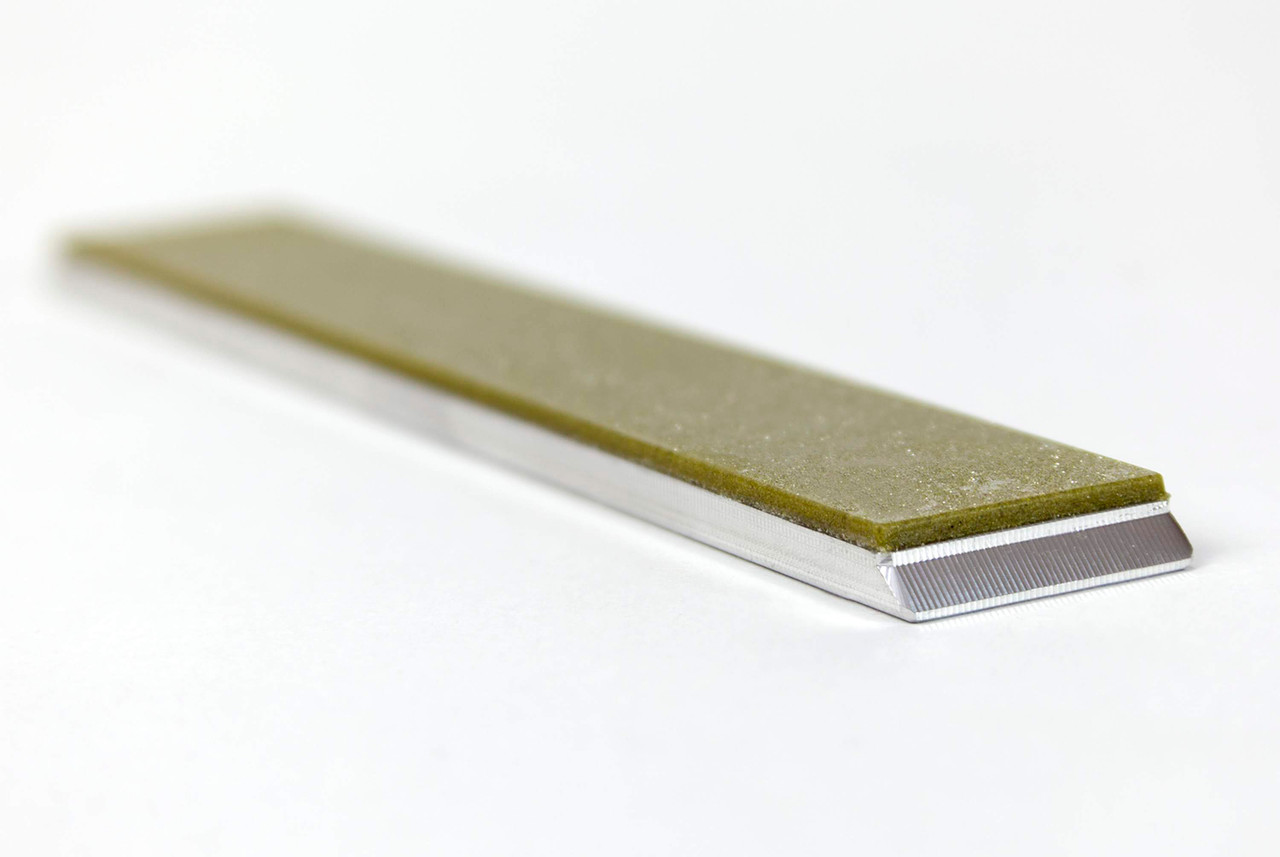
A knife sharpening stone is the professional standard, giving full control and longevity. They come in various grits. You’ll need something coarse or medium to shape the edge, and something fine or ultra fine for finishing touches. The finer grits polish the apex into a true razor edge.
Honing Rod
Ceramic rods don't remove much metal. They realign the edge between sessions, and are lightweight to use in the field, which keeps the knife sharp longer. Use one or a few strokes a day on heavily used knives.
Marker (Sharpie Trick)
A marker lets you paint the bevel and track your angle. If the ink wipes off evenly along the entire length, your technique and sharpening angle is on point.
Cloth & Water/Lubricant
Keep a lint-free cloth and a bottle of soapy water nearby. Lubrication keeps the stone clean and protects the blade edge from heat.
How to Sharpen a Pocket Knife with a Stone
This routine works for most pocket knives, from cheap knives to premium folders. It takes practice the first few times, but the muscle memory comes quickly.
Step 1: Gather the Right Tools
Lay out your stone, marker, cloth, water, and the dull knife. Set up in a clean spot with good light and stable footing.
Step 2: Mark the Bevel with a Marker
Color the blade edge with a Sharpie. As you sharpen, the marker tells you whether you're hitting the apex or sliding off the wrong angle.
Step 3: Find the Correct Angle
Generally speaking we recommend 21 degrees on most knives. EDC blades sit in a 20- to 24-degree sweet spot. Remember lower angles are sharper and better for slicing, but you sacrifice durability. Higher angles are more durable, but tend to hold up longer.
Step 4: Apply the Right Pressure
Use even pressure. More force won't sharpen faster; it just rounds the apex. A consistent angle matters more than speed when you sharpen a pocket knife.
Step 5: Start Sharpening (Heel to Tip)
Push the stone across the knife blade from heel to tip. Cover the entire length of the blade
Step 6: Switch Sides and Repeat
Flip to the other side and match the same angle. Make multiple passes, alternating sides, until a burr develops along the full length of the blade and the edge looks uniform.
Step 7: Refine & Polish the Edge
Move to finer grits to remove the burr and polish the edge. Test the result with the Paper Test or Thumbnail Test before you call it done.
Types of Knife Sharpening Tools
Different tools suit different goals. Pick based on how often you sharpen knives and how much control you want.
Whetstones
Arkansas stones, Japanese waterstones, and diamond stones all fall under the category of whetstones. Diamond stones, aluminum oxide stones, or silicon carbide stones cut fast on dull or chipped blades; ceramic and water stones shine for fine honing.
Guided Sharpening Systems
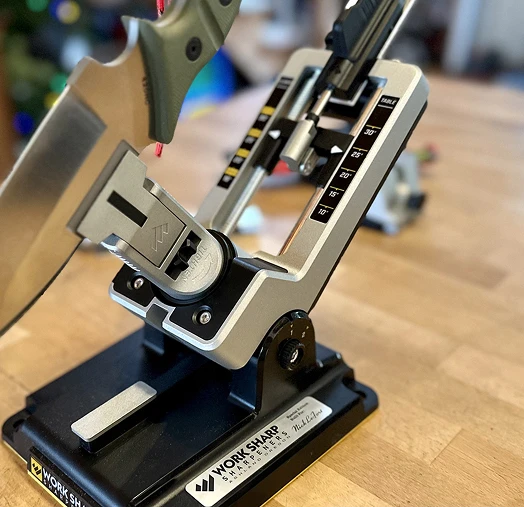
Guided systems and knife sharpening kits hold the knife in place and hold a consistent angle, so beginners get reliable results without years of practice.
Pull-Through Sharpeners
Pull-through devices are quick but aggressive. They remove more metal than needed and can damage cheap knives over time. Avoid these at all costs.
Electric Sharpeners
Belt grinders with electric units sharpen quickly, but can overheat steel and ruin the temper. Best left to careful hands or kitchen knives.
What to Consider When Choosing a Pocket Knife Sharpener
Pick a sharpener that matches your blade and your patience.
| Factor | What to Look For |
| Angle adjustment | Adjustable angle, 10 - 27 degrees |
| Grit options | Coarse + fine + ultra fine |
| Stability | Non-slip base, secure clamp |
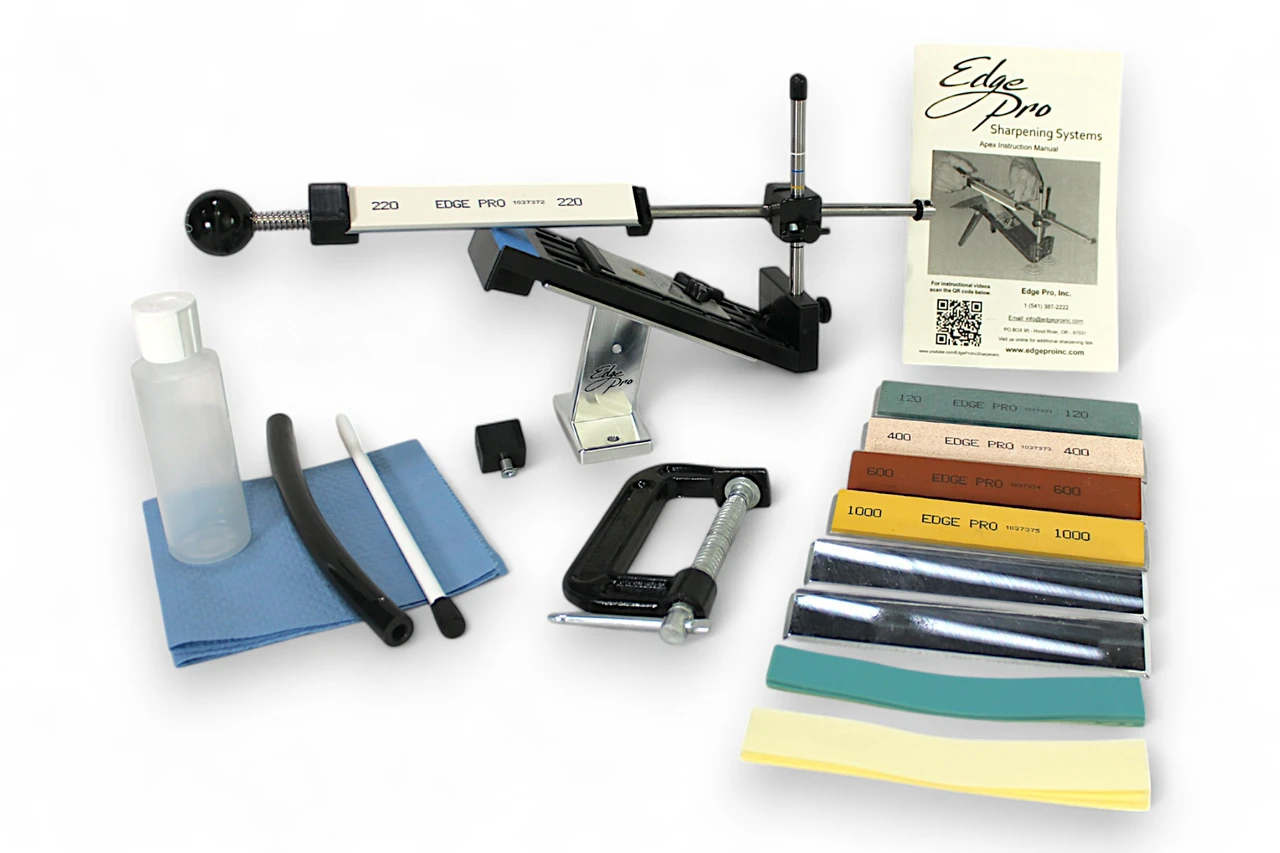
For freehand control and repeatable accuracy, an Edge Pro knife sharpener delivers both in one rig.
Common Pocket Knife Sharpening Mistakes to Avoid
Even seasoned users slip up. Watch for these:
- Drifting off the sharpening angle mid-pass
- Using more force instead of more passes
- Skipping the burr check on the other side
- Letting the stone dry out
- Polishing an edge that was never properly profiled
A little practice fixes all of them. Practice makes perfect when it comes to knife sharpening.
Maintenance Tips: Keep Your Pocket Knife Sharp Longer
Sharpening is half the battle. Daily habits stretch the life of every edge:
- Clean the knife regularly to prevent gunk buildup
- Inspect for broken or damaged parts after heavy use
- Apply a drop of lubricant to the pivot to reduce friction
- Store the knife in a safe, dry location away from humidity
Browse more posts of knife sharpening tips for deeper guides.
Conclusion: Mastering Pocket Knife Sharpening
You don't need a workshop to sharpen a pocket knife well. You need a stone, a consistent angle, and patience. Follow the seven steps, dodge the common mistakes, and your blade will keep cutting like new for years.
With a little practice, the technique becomes second nature, and every cut feels easier than the last.
The difference between a frustrating cut and a clean one is rarely the knife itself. It is the edge you gave it, the angle you held, and the few minutes you invested before the work began. Sharpen it well, carry it with intention, and the blade will never let you down.
Frequently Asked Questions
What is the best tool to sharpen a pocket knife?
A guided sharpener is the gold standard because it gives full control over angle and grit. Freehand whetstone are a strong runner-up but require skill and a lot of patience
What angle should you use to sharpen a pocket knife?
It will always depend on the knife. Checking the existing edge with a sharpie is recommended. But generally speaking I find most knives are set between 21 and 24 degrees, contrary to what the manufacturers tell you which they usually say is 15 degrees. Going lower can lead to a sharper edge but risks chipping under demanding use.
Can you sharpen a pocket knife without a sharpener?
Yes. In a pinch, the unglazed bottom of a ceramic mug, a smooth river stone, or fine sandpaper on glass works. Results won't match a real sharpening stone, but they'll restore basic sharpness.
What is the easiest way to sharpen a pocket knife for beginners?
Start with a guided system. It holds the same angle for you, so you focus on pressure and stroke length.