
A great edge is not luck. It is geometry you can repeat. This knife sharpening angle guide explains what a sharpening angle is, why it matters for the cutting edge, and how to pick the correct angle for your knife type. Use the chart, then lock in the right sharpening angle so your kitchen knives, pocket knives, and outdoor knives stay reliable instead of turning into a dull knife quickly.
What Is A Sharpening Angle?
A sharpening angle is the angle between the blade face and the abrasive at the bevel. Most knives are double bevel, so angles are listed “per side.” If you sharpen at 20 degrees per side, your total included angle is about 40 degrees.
Think of knife sharpening angles as the recipe for your edge. When you repeat the same sharpening angle, you repeat the same result.
A smaller angle creates a thinner edge. A lower angle can feel extremely sharp, but it is also more delicate. A bigger, wider angle supports the bevel and often improves durability and edge retention for rough work.
Pick a repeatable sharpening angle that matches how you use the knife.
How Angles Affect Your Knife
- Cut feel: A lower angle reduces wedging, so the cutting edge glides in precision cutting.
- Strength: A wider angle supports the knife edge on chopping and impact, which helps thicker blades.
- Edge retention: A steady sharpening angle improves edge retention because touch-ups remove less steel.
- Steel hardness: Higher steel hardness can hold a thinner edge, but harder steel can chip if the angle is too low for the task.
- Blade geometry: Thin grinds tolerate lower angles. Thick spines and tall bevels often need a higher angle.
- Micro-bevel option: Add a tiny micro-bevel at a slightly higher sharpening angle for extra support.
Common Angle Ranges By Knife Type
Western Kitchen Knives (20 – 22° Per Side)
Most western knives live here because it balances sharpness and durability. It is a solid range for chef's knives and everyday kitchen knives in most western knives lineups. If you want a baseline, start around 21 degrees per side and keep that correct angle for a few knife sharpening sessions.
Japanese Knives: 15°–18°
Many japanese knives run thinner grinds and higher steel hardness, so they can support a more acute bevel. A 15–18 degree sharpening angle per side suits many japanese kitchen knives, but it demands lighter technique. Avoid twisting in hard product and avoid scraping the edge on the board.
Utility Knives: 20°
Utility blades see mixed tasks. A 20 degree sharpening angle keeps good bite without feeling fragile, and it works well for many pocket knives.
Cleavers & Heavy-Duty Knives: 25°
A cleaver needs support. A 25 degree sharpening angle per side helps prevent rolling and chipping. This range also fits thick outdoor knives and tough-use blades where durability matters more than hair-splitting sharpness.
The Complete Knife Sharpening Angle Chart
Use this knife sharpening angle chart as a starting point. Then adjust based on board type, steel, and how the knife fails in your hands. Keep the sharpening angle consistent and your bevel stays thinner over time.
| Knife Type | Recommended Angle (per side) | Additional information |
| Western chef’s knife | 20–22° | Great default for western knives and home cooking. Start at 21° for a dependable right sharpening angle. |
| Paring knife | 20° |
Small blade, lots of tip work. Use light pressure to protect a thin edge. |
| Bread and serrated knives | 20–25° | Maintain the bevel side gently. Full re-profiling is rarely needed. |
| Japanese gyuto | 15–18° | Fits many Japanese knives. Use controlled cuts to protect the cutting edge. |
| Santoku | 15–18° |
Similar to gyuto. Go slightly higher if you rock cut. |
| Vegetable knife (nakiri) | 15–17° | A vegetable knife likes a clean, straight edge. Keep technique smooth on dense produce. |
| Single bevel slicer | 10–15° on bevel side | Single bevel blades use a different approach. Keep the primary bevel consistent. |
| Pocket knife, EDC | 20–25° | pocket knives see mixed tasks. A higher angle helps if you cut abrasive materials. |
| Hunting knife | 22–25° | A hunting knife needs bite and toughness. Consider a micro-bevel for better edge retention. |
| Outdoor knife | 23–30° | Thick outdoor knives like more support. Go higher for hard use. |
| Fillet knife | 15–18° | Slicing blade. Light pressure keeps the blade edge clean. |
| Cleaver | 25° | Heavy impact blade. A wider angle helps durability. |
| Straight razor | 10–12° | straight razors require fine abrasives and minimal pressure. |
Sharpening Tools & Methods
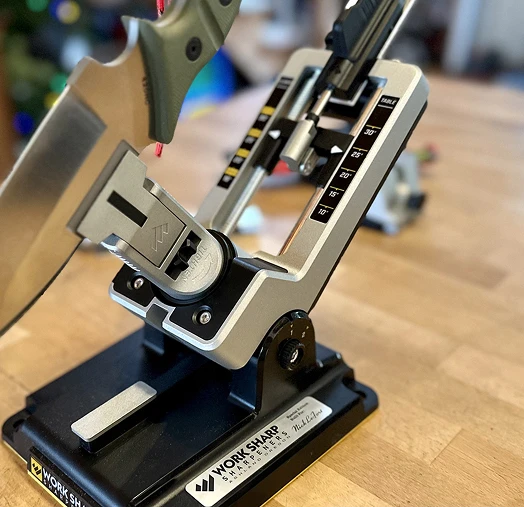
Holding the right sharpening angle is easier when your tool helps you repeat it. Freehand can work, but most people struggle to keep the sharpening angle steady through a full stroke. A guided system reduces variables and speeds up learning.
Edge Pro offers guided knife sharpeners like the apex knife sharpener, plus kits that bundle stones and accessories. A good knife sharpening kit gives you a clean grit progression so you can repair a dull knife, then refine the edge. Your knife sharpening tools matter too. An angle gauge helps confirm the correct angle, and a small knife attachment improves control on compact blades and many pocket knives.
A simple workflow helps you stay consistent across different knife sharpening angles.
- Pick the sharpening angle you want and write it down for that specific knife. This keeps the sharpening process repeatable.
- Start with a coarse abrasive only when you need it. Use it to reset the bevel on a dull knife or repair small chips, then move up quickly.
- Refine the bevel with medium and fine stones until the apex forms along the whole blade edge. Check the cutting edge to confirm you hit the full bevel.
- Finish with light pressure, then test on paper or food. If the edge feels fragile, add a micro-bevel at a slightly higher sharpening angle.
Edge Pro’s lineup makes this workflow easier because you control angle and pressure without fighting clamps. If you want a flexible platform that handles almost any blade profile, start with the apex knife sharpener. If you prefer a faster bench setup with quick adjustments, look at BevelTech kits. Both support repeatable knife sharpening angles for kitchen knives, folders, and many outdoor knives.
Your abrasives shape the result. A quality sharpening stone sets the bevel cleanly. Diamond options help when you do knife sharpening on harder steel or want fast cutting. Water stones are a solid choice when you want smoother feedback and a cleaner finish. Keep stones flat.
Accessories help with precision. The digital angle gauge confirms the correct angle when you switch between japanese knives and western knives. A bench mount adds stability. A small knife attachment gives better control on compact blades and pocket knives.
For more technique help, see Knife Sharpening tips and focus on consistency: same angle, light pressure, clean stone.
Conclusion
Pick a sharpening angle that matches your knife type, then keep it consistent. Use this knife sharpening angle chart as your baseline, adjust based on performance, and stop chasing new angles every week. When you hold the right sharpening angle session after session, you remove less steel, keep a thinner bevel, and get better edges with less effort.
Build your setup with guided knife sharpeners, a simple knife sharpening kit, and reliable knife sharpening tools. Pair that with a quality sharpening stone, and you can keep a crisp edge you trust.
Frequently Asked Questions
How do I know if my knife is 15 or 20 degrees?
Use a repeatable reference. On a guided system, set the rod height and record it. If you sharpen freehand, try the Sharpie trick: color the bevel, take a few strokes, and see where the stone hits. Adjust until you contact the full bevel at the correct angle and the edge forms cleanly.
What is the best angle to sharpen knives?
It depends on the knife type and use. Many home kitchen knives do well at 20–22 degrees per side. Many japanese knives do well at 15–18 degrees. Cleavers and hard-use blades often like 25 degrees or more. Pick one sharpening angle, then keep it consistent.
What happens if you sharpen a knife at the wrong angle?
If the sharpening angle is too low for the job, the edge can chip or roll. If the sharpening angle is too high, the knife can still feel dull because the wedge behind the knife edge is thick. Either way, you waste steel and time during knife sharpening.
Does a lower angle make a knife sharpener?
A lower angle can make a knife feel sharper because it reduces cutting resistance, but it is not automatically better. Sharpness also depends on apexing, burr removal, and grit progression. Use a lower angle for slicing, then add a micro-bevel at a slightly higher sharpening angle for durability.