
Types of Sharpening Tools: A Complete Guide for Beginners
Posted by Types of Sharpening Tools: A Complete Guide for Beginners on Mar 26th 2026
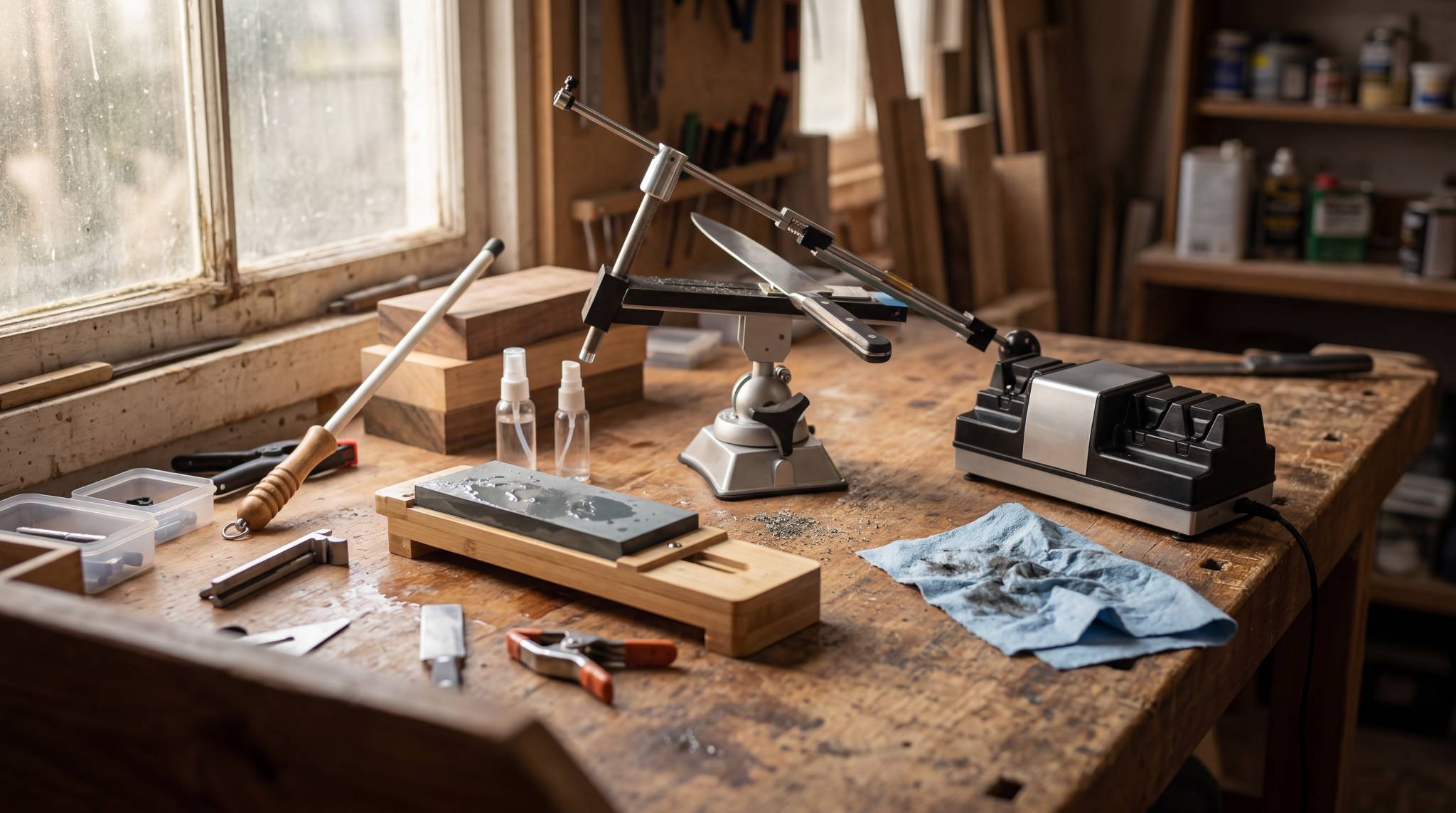
A dull knife makes prep feel harder than it should. You press more. The blade slips more. The cut gets messy. A true sharp edge does the opposite. It bites cleanly, tracks straight, and gives you control.
There’s a mix of sharpening methods and gear that match your style, your patience, and how precise you want to get. This guide breaks down the most common types of sharpening tools, what they do well, and where beginners usually go wrong.
Why Knife Sharpening Is Important
Knife injuries are common enough that researchers have studied them at scale. One U.S. study using emergency department data estimated millions of knife-related injuries over time, including a large share from kitchen and cooking knives.
A well-maintained edge can support safer cutting habits because you use less force and get fewer “skips” on the cutting edge. It also protects your investment in high quality knives, whether you cook every day or only on weekends.
What Types of Knife Sharpening Tools Are There?
Sharpening Stones (Whetstones) / Freehand Sharpening
Sharpening stones (often called a whetstone) are a versatile option. You control the sharpening angle, pressure, and finish. That’s why stones can produce everything from a working edge to a polished edge and even a razor sharp edge.
Stones come in grit ranges:
- Coarse grit for damaged edges and dull blades
- Medium grit for restoring a working edge
- Finer grit stones for refining and polishing
Many stone types use materials like aluminum oxide or diamond abrasives. Edge Pro also emphasizes consistent control and precision as the path to better edges, which is exactly why stones and guided systems do well for repeatable results.
Beginner tip: Start with one good stone for knife sharpening in a mid-range grit, then add finer stones later once your technique is consistent.
Manual Knife Sharpeners
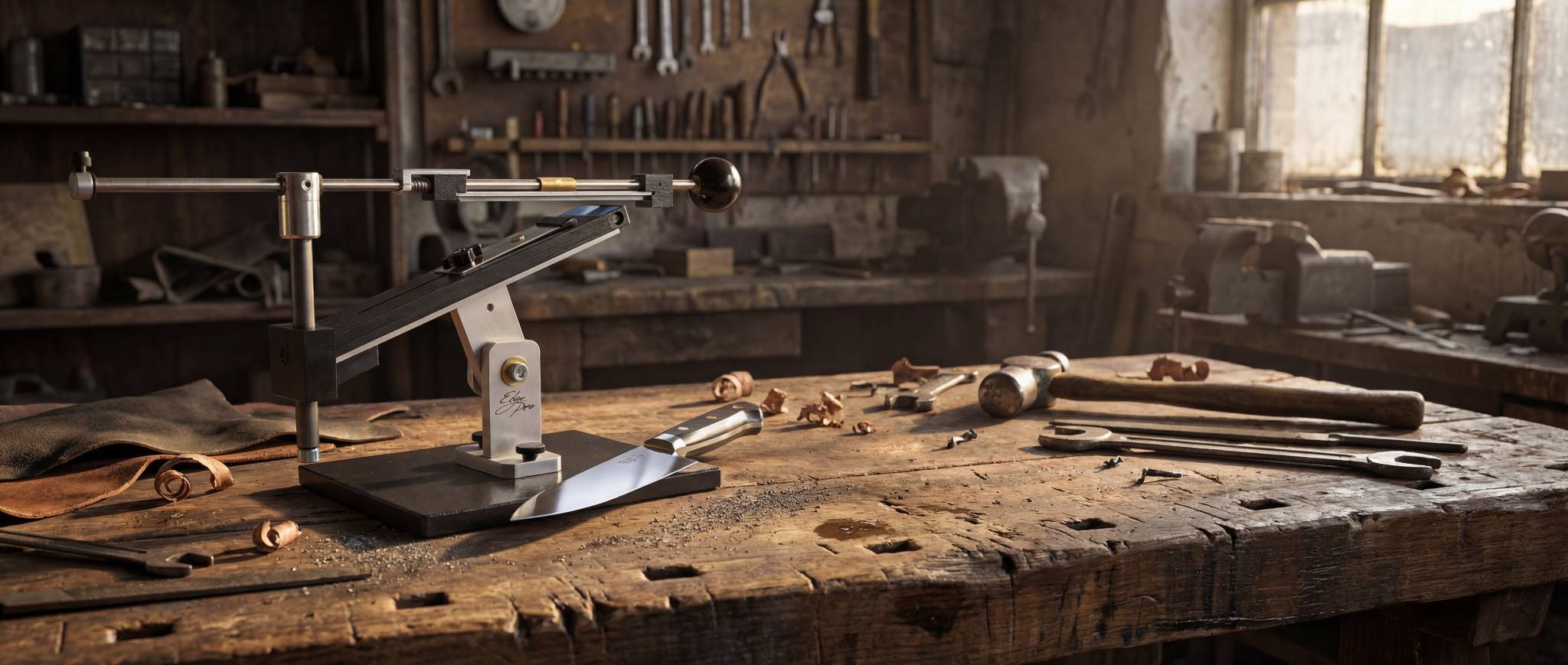
A manual knife sharpener can use a variety of abrasives and gives you complete and total control of sharpening angle and consistency.
Pros:
- Consistent angles – Biggest advantage. Takes the guesswork out and gives repeatable results.
- High precision – You can dial in exact edge geometry, bevel symmetry, and finish.
- Better edges – Plain and simple—you can get sharper than most other methods.
- Control over material removal – Go aggressive or barely touch the edge—it’s up to you.
- Versatility – From beat-up work knives to high-end steels, you can handle it all.
- Less skill-dependent than freehand – Still a learning curve, but way more forgiving.
- Scalable – Upgrade stones, add accessories, refine your process over time.
- Edge longevity – A properly set edge tends to last longer and perform better.
Cons:
- Slower – You’re not blasting through knives. Good results take time.
- Learning curve – “Guided” doesn’t mean idiot-proof. You still need to understand basic knife sharpening fundamentals
- Setup hassle – not exactly grab-and-go. Unless you have a permanent sharpening station.
Manual sharpeners work well for all types of knives, especially if you want consistent results without learning freehand technique which can take a lifetime to perfect.
Electric Knife Sharpeners
Electric knife sharpeners speed up the process. Some use abrasive wheels, others use belts. They can be very effective, but they also remove material quickly, so the margin for error is smaller.
Pros:
- Quick
- Low learning curve
Cons:
- Can over-grind if used aggressively
- Less control over the bevel and finish
- Not ideal for delicate edges or specialty grinds
- Creates heat
- Requires electricity
- Releases fine airborne debris
If you choose electric, treat it like power tools. Use light pressure. Let the machine do the work. Wear a mask. Stop early and test.
Honing Rods
A ceramic hone helps maintain the knife’s edge between sharpening sessions. Honing often realigns or refreshes the edge and can make a knife feel sharper, but it does not replace true sharpening for a fully dull knife.
Victorinox explains the common distinction: Honing typically realigns the edge and removes a little metal, while sharpening removes metal to create a new edge.
Translation for beginners: Honing helps if an edge still exists. If the knife still feels dull after honing, sharpen it.
Why Manual Guided Sharpening Systems are the Best Knife Sharpening Tools Out There
Guided systems give you control over every variable that matters:
- Grit choice
- Sharpening angle
- Repeatability
- Pressure
- Finish quality
Guided systems have all the benefits of the traditional whetstones, with the added benefit of controlled, repeatable angle. They can handle everything from damaged blades to maintenance touch-ups. With such a wide variety of stones available for them, they adapt well to different steels, including harder steels found in Japanese knives.
Common Mistakes to Avoid
Most beginner issues come from a few repeat mistakes:
- Overheating the edge, and removing way too much metal when using powered tools
- Switching angles mid-stroke, which rounds the blade’s edge (typically happens when learning freehand sharpening)
- Skipping grits and expecting a clean finish
- Ignoring the burr, which means you never create a new edge
- Using a honing rod to “fix” a fully dull knife
- Attempting to sharpen at an extremely low angle, then getting frustrated that it’s taking too long
Tips for Beginners Using Manual Knife Sharpeners
Start with repeatability, not speed.
- Your sharpening angle and abrasive are directly related to the amount of time it will take you to establish a burr.
- Use moderate pressure , especially on finer stones.
- Let the abrasive do the work.
- Count strokes per side for balance.
- Check for a burr often instead of grinding blindly.
- Wipe the blade to remove metal particles before testing.
What Is the Easiest Knife Sharpener for Beginners?
For most beginners, the easiest path is a guided system that controls angle and pressure.
If you want consistent results with less trial-and-error, an edge pro knife sharpener kit or apex sharpening knife pro edge style guided setup can reduce mistakes and speed up learning.
How Often Should I Sharpen My Knives?
A practical baseline:
- Hone lightly every few uses if you cook often.
- Sharpen when honing stops restoring performance.
- Sharpen sooner if you cut hard materials or do lots of chopping.
- Anytime you are not satisfied with your knife’s performance.
If your knife starts sliding on tomato skin or tearing herbs, it’s time.