
How To Sharpen A Knife With A Ceramic Rod
Posted by Cody Kendall on Aug 4th 2026
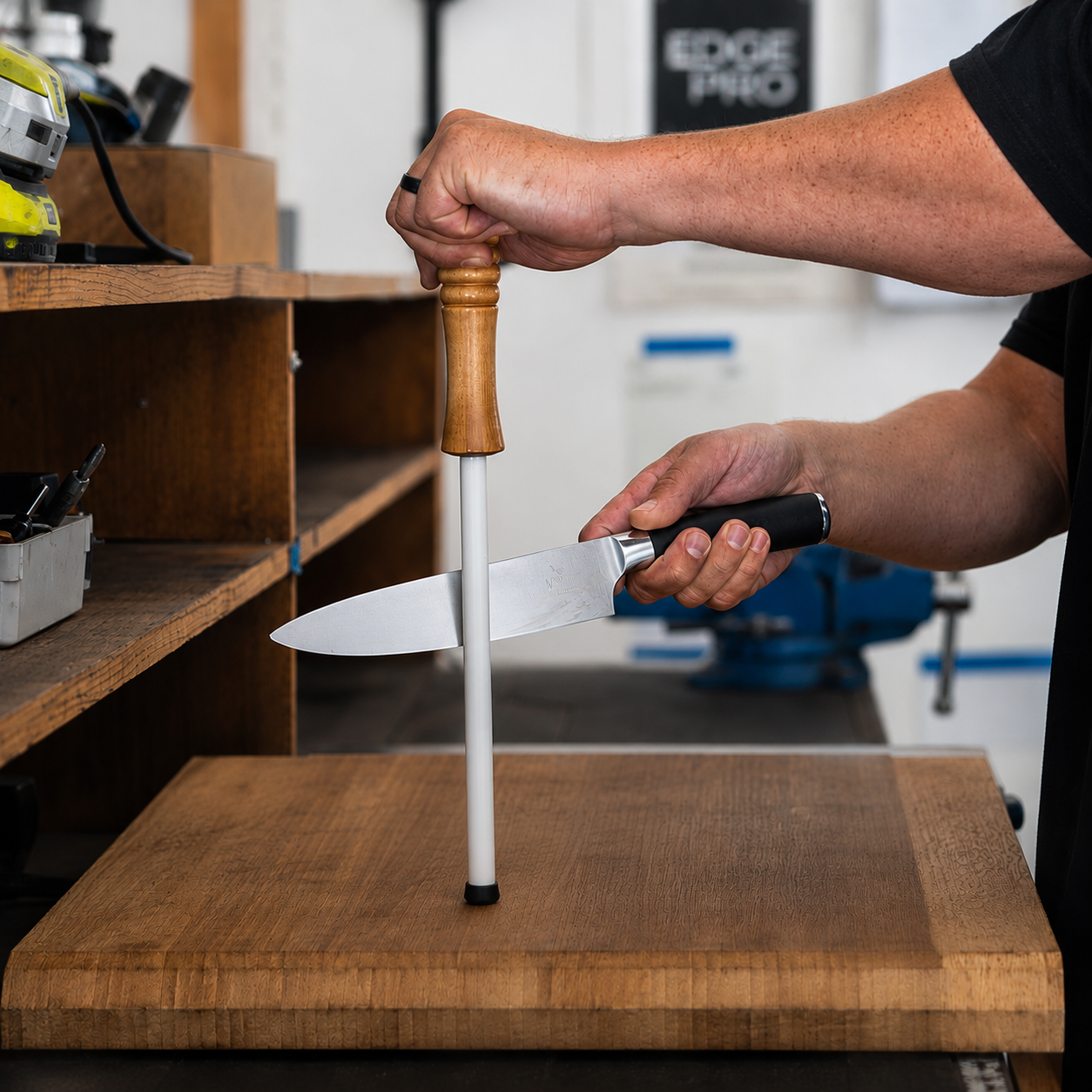
Ask ten people what a sharpening rod actually does, and you're likely to get ten different answers—most of them incorrect. That's understandable. Many people learned by watching a chef rapidly swipe a knife across a steel a few times on television. It looks impressive, but it doesn't explain what's really happening. Understanding how to use a sharpening rod starts with setting that image aside.
The first thing to know is that not all sharpening rods work the same way. In fact, several different types exist, and each serves a different purpose.
A smooth steel rod doesn't actually sharpen the knife. Instead, it gently realigns the thin cutting edge after it has rolled slightly during normal use. This can restore some cutting performance and extend the time between full sharpening sessions, but it does not create a new edge.
A ceramic rod works differently. Because it is mildly abrasive, it removes a very small amount of steel from the edge, refining it and restoring sharpness. Used properly, a ceramic rod can be an excellent tool for routine edge maintenance.
Many knife sets, however, include ribbed or abrasive steel rods. These are commonly marketed as sharpening steels, but they work by tearing and fracturing the steel at the knife's edge rather than cleanly refining it. The fractured edge often feels very sharp at first, but those weakened metal fragments quickly break away during use, leaving the knife duller than before. This is one reason these rods must be used so frequently.
For that reason, we do not recommend using ribbed or abrasive steel rods. A smooth steel or a quality ceramic rod is a far better choice for maintaining a sharp, long-lasting edge between sharpening sessions.
This article primarily covers what a ceramic rod is actually good for, how not to wreck an edge with it, and when to put it down and get a real professional knife sharpener involved.
What a Sharpening Rod Does
One of the biggest sources of confusion is the term "sharpening rod." It's printed on packaging, used in advertisements, and repeated so often that most people assume any rod will sharpen a knife. In reality, that's rarely the case.
The rods included with most knife block sets are intended for edge maintenance, not sharpening. A smooth steel rod simply realigns an edge that has rolled over during use. A ceramic rod goes a step further by removing a very small amount of steel as it refines the edge. Both can help a knife stay performing well between sharpenings, but neither can restore a truly dull edge.
This misunderstanding is why so many people feel like their honing routine "doesn't work." The rod isn't failing—it's being asked to do a job it was never designed to do.
If your knife still has a good edge that has simply lost a little bite, a smooth steel or ceramic rod can bring it back to life. But if the knife slides across a tomato skin, crushes an onion instead of slicing it, or struggles to cut paper, the edge has become dull. The knife needs to be sharpened on an abrasive designed to create a new edge.
How to Prepare Before Using a Honing Rod
It only takes a minute or two to prepare, but it's a step that's easy to skip. I know because I skip it more often than I should. Every time I do, I end up wishing I hadn't.
Check the Edge
Before you touch the rod, inspect the knife.
Look at the edge under a bright light. A sharp edge is so thin that it reflects little to no light. If you see shiny spots along the edge, those areas have become rounded or rolled over and can benefit from honing or needs to be resharpened.
If you're comfortable doing so, you can also lightly draw your thumbnail across the edge—not along it. A sharp edge will grab your nail slightly, while a rounded section will feel smooth and slide.
If you notice chips, flat spots, or significant damage, put the rod away. A honing rod can't repair a damaged edge. That's a full sharpening job, and if you've never done one, a quick read on how to use a knife sharpener will save you from guessing your way through it.
Secure the Rod
Whether you prefer to use the rod vertically with the tip resting on a folded towel or cutting board, or horizontally in front of you, stability is the priority.
A rod that moves during the stroke is difficult to control and increases the risk of slipping. Take a moment to position it securely before you begin.
Choose the Angle
One of the most common mistakes is honing at the same angle—or even a lower angle—than the knife was sharpened.
Instead, hone at a slightly higher angle than the sharpening angle. This ensures the very apex of the edge contacts the rod. If the angle is too low, you'll polish the sides of the bevel without ever touching the cutting edge.
How to Use a Honing Rod
Many people search for 'how to sharpen a knife with a rod,' but what they're really looking for is how to use a honing rod correctly. The actual mechanics here are almost boring. That's the point.
Hold the Rod
Grip the rod firmly with your non-dominant hand and keep your wrist steady throughout the stroke. If using the rod vertically, place the tip on a stable surface. A rubber tip, like the one found on our ceramic rods, helps keep the rod from slipping during use.
Angle the rod slightly away from your body so each stroke moves safely away from you.
Set the Angle
Place the knife against the rod and slowly raise the spine until the edge contacts the rod. If you already know your sharpening angle, raise it just slightly higher.
Once you find the angle, maintain it throughout the entire stroke. Consistency is far more important than perfection.
Use Light Pressure
Less pressure is almost always better.
Immediately after sharpening a knife, use only the weight of the blade when honing. As the edge sees more use between sharpening sessions, you can gradually increase the pressure slightly—but only enough to maintain contact with the rod. Let the rod do the work.
Alternate Each Side
Starting at the heel of the blade, sweep the knife toward the tip in one smooth motion while alternating sides after each stroke.
Five to eight passes per side is usually enough. More isn't necessarily better.
Test the Edge
After honing, test the knife on a sheet of paper or the skin of a ripe tomato.
If the edge bites cleanly with little effort, you're finished. If it still slides, tears, or struggles to cut, the rod has done everything it can. The knife is no longer a candidate for honing—it needs to be sharpened.
How to Maintain the Correct Sharpening Angle
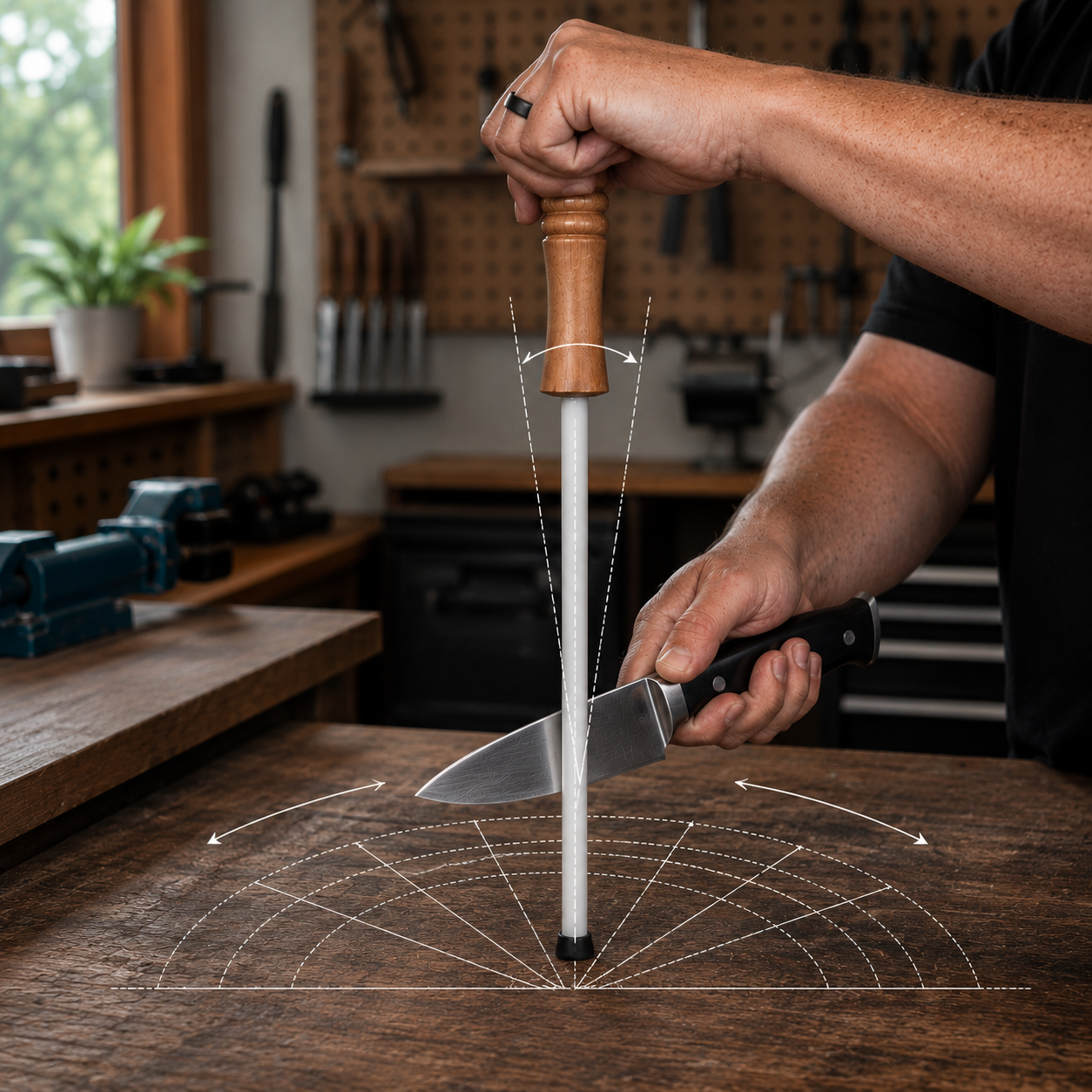
Slow and correct beats fast and wrong, every time, no exceptions.
Angle Guidelines
The key is to hone at an angle slightly higher than the angle used to sharpen the knife. This ensures the apex of the edge is contacting the rod. If your angle is too low, you'll only touch the sides of the bevel and accomplish very little.
Once you've found the correct angle, keep it there. A consistent angle is far more important than a perfect one.
Common Angle Errors
The most common mistake is allowing your wrist to rotate during the stroke. As the knife moves from heel to tip, the angle often increases or decreases without the user realizing it.
Rather than focusing on speed, concentrate on keeping the angle consistent from the beginning of the stroke to the end. Slow, controlled movements will always produce better results than fast, inconsistent ones.
Practice Tips
If you're new to using a honing rod, practice with an inexpensive knife first.
A permanent marker is one of the best training tools available. Color the edge bevel with a felt-tip marker, then make a few light passes on the rod. Inspect the bevel afterward. If the ink has been removed evenly along the entire edge, you're using the correct angle. If ink remains at the edge or shoulder of the bevel, adjust your angle and try again.
Mistakes to Avoid When Using a Sharpening Rod
A honing rod is more forgiving than a sharpening stone, but technique still matters. Avoiding a few common mistakes will make the rod more effective and help extend the life of your edge.
Too Much Pressure
This is the mistake we see most often.
Many people assume more pressure means faster results, but the opposite is usually true. Excessive pressure can roll or damage a thin edge instead of maintaining it. Use the lightest pressure that keeps the edge in contact with the rod.
Inconsistent Angle
Consistency is the foundation of good edge maintenance.
Changing the angle during the stroke creates an uneven edge and reduces the effectiveness of the rod. Pick an angle, maintain it from heel to tip, and repeat it on every pass.
Wrong Rod Type
Not every rod is designed for every job.
A smooth steel rod is excellent for maintaining an already-sharp edge, but it won't restore a dull knife. A ceramic rod provides a little more cutting action and can refine an edge, while aggressive abrasive rods chew up the edge of your knife (not recommended).
Choose the rod that matches the condition of the edge rather than expecting one rod to solve every sharpening problem.
Overusing the Rod
More isn't always better.
A few light passes between sharpening sessions are usually all that's needed. Constant honing—especially with abrasive rods—can gradually wear away the edge and shorten the time between full sharpening sessions.
When to Use a Sharpening System Instead
A honing rod is a maintenance tool. Its job is to extend the life of a sharp edge, not replace sharpening altogether.
A rod buys time. Nothing more, nothing less. Once it stops doing that job, a real knife sharpener kitwith a proper stone progression hands back control, a rod was never built to give you.
Very Dull Knives
Sliding off a tomato, no matter how many honing passes you throw at it? That edge is past realignment. Time for actual stock removal on a stone.
Damaged Edges
Honing rods cannot repair chips, flat spots, rolled sections, or uneven bevels.
These types of damage require steel to be removed evenly until a new, continuous edge is formed. Only a proper sharpening system can accomplish that.
Precision Sharpening
If you want the angle right every time without having to think about it, a guided system like the Edge Pro Apex Knife Sharpener Kit holds the blade in place while the stone does the work. That's the main benefit, really. Less guessing, more repeating.
How Often to Use a Honing Rod
How often you should use a honing rod depends entirely on how often—and how hard—you use your knife. There isn't a magic number.
A kitchen knife that sees daily meal prep may benefit from a few light passes every few uses. A knife that's only used occasionally can go much longer between honing sessions.
The best indicator isn't the calendar—it's the edge itself. If the knife has lost a little bite but still feels fundamentally sharp, a honing rod is appropriate. If it drags through food, slips on tomato skin, or tears paper instead of slicing it cleanly, honing has reached its limit and it's time to sharpen.
Let the condition of the edge—not the date on the calendar—tell you what it needs.
Conclusion
A honing rod has one purpose: to maintain an edge that is already sharp.
Used correctly, it can noticeably extend the time between sharpening sessions and keep your knives performing their best. The keys are simple: use the correct angle, apply light pressure, and don't expect the rod to do a sharpener's job.
Once the edge has become truly dull or damaged, it's time to move to a proper sharpening system. Understanding that distinction is the difference between constantly fighting with your knives and enjoying tools that cut the way they were meant to.
Frequently Asked Questions
Let’s answer some questions around sharpening the knife with a rod.
Can You Sharpen a Knife With a Rod?
This depends on what you mean by "sharpen."
A smooth steel rod does not sharpen a knife. It realigns a rolled edge, allowing an already-sharp knife to cut better again.
A ceramic rod removes a small amount of steel while refining the edge, so it can restore some sharpness to a knife that has begun to dull. However, once a knife becomes truly dull, neither type of rod is a substitute for sharpening on stones or a guided sharpening system.
What Angle Should a Knife Sharpening Rod Be?
The rod should be held at a slightly higher angle than the angle used to sharpen the knife. This ensures the apex of the edge contacts the rod instead of the sides of the bevel.
Is a Honing Rod the Same as a Sharpening Rod?
Not really.
The term "sharpening rod" is commonly used in marketing, but it can be misleading. Most rods included with kitchen knife sets are honing rods designed to maintain an edge, not create a new one.
Smooth steel rods primarily realign the edge. Ceramic rods also provide light abrasion while refining it. Neither replaces a proper sharpening system when the knife becomes truly dull.
How Many Strokes Should You Use on a Sharpening Rod?
There isn't a fixed number.
Five to eight light passes per side is a good starting point for routine maintenance. If the edge doesn't improve after a few additional passes, don't press harder or keep going indefinitely. The knife is likely ready for sharpening.
FINAL TAKEAWAY
"Think of a honing rod as maintenance, not repair. It keeps a sharp knife sharp, but it can't make a dull knife sharp again."